
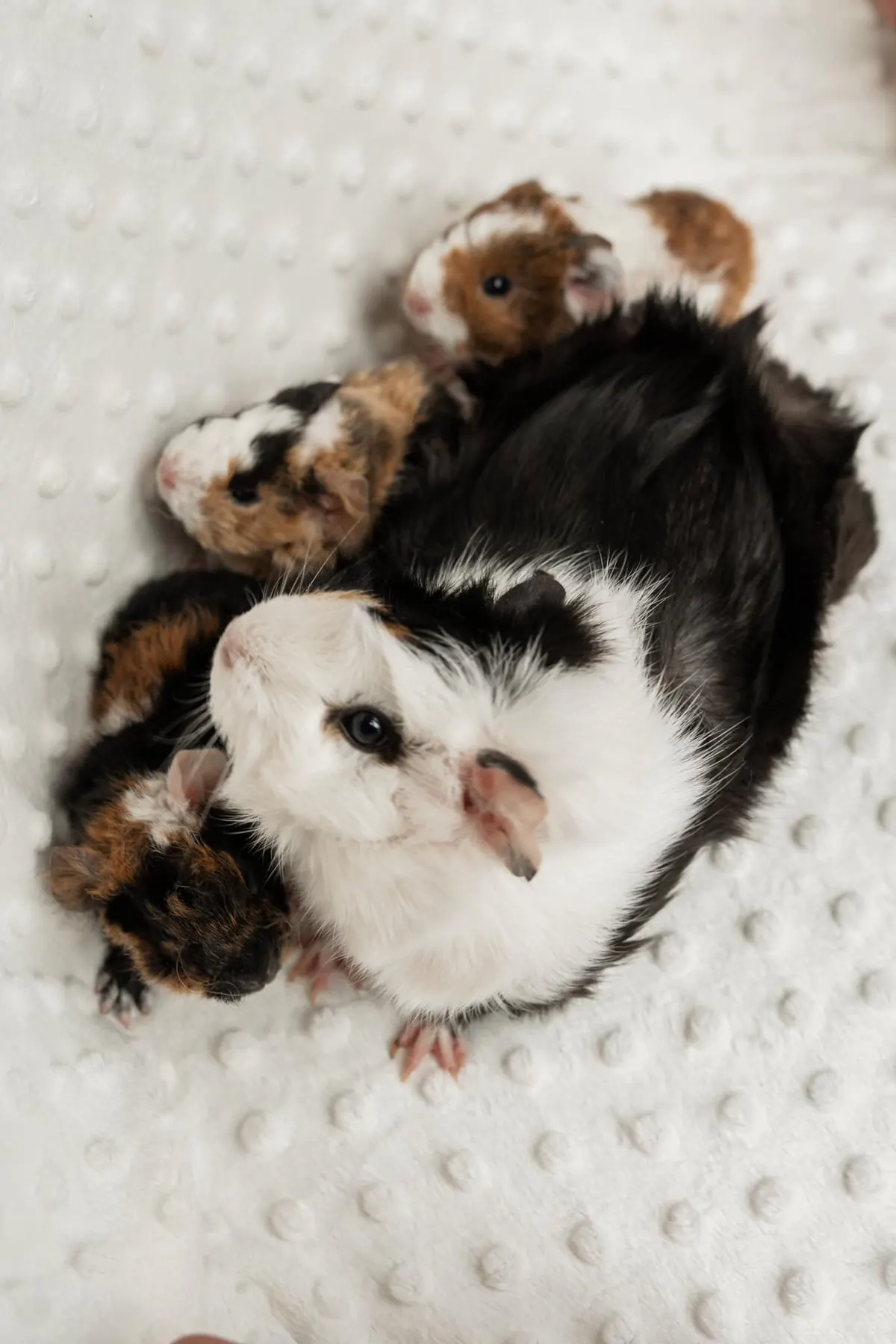
Guinea pigs (cavies) make gentle, vocal, and endlessly charming companions. However, as prey animals with unique physiological needs, their care requirements differ significantly from hamsters or rabbits.
1. Guinea Pigs Must Live in Pairs or Groups
Guinea pigs are naturally herd animals. In Switzerland and several other countries, keeping a single guinea pig is legally prohibited due to their strong social requirements.
- Same-sex pairs (two males or two females) or a neutered male with females work best.
- Human interaction cannot replace cavy companionship.
2. Enclosure Size Matters
Standard pet shop cages are almost always too small. Minimum enclosure requirements:
- 2 Guinea Pigs: At least 7.5 sq ft (preferably 10.5 sq ft or larger, e.g., a 2x4 C&C cage).
- Proper Ventilation: Use open-top C&C grid cages or wire-topped enclosures. Avoid glass aquariums.
3. Daily Diet Core
Guinea pigs cannot manufacture their own Vitamin C and rely on continuous digestion.
- 85% Timothy Hay: Unlimited fresh grass hay available 24/7.
- 10% Fresh Vegetables: 1 cup of fresh leafy greens per cavy daily (bell peppers, romaine, cilantro).
- 5% Plain Pellets: 1-2 tablespoons of plain Vitamin C fortified Timothy pellets.
Core Summary
- Keep at least two cavies together.
- Provide a spacious, open-air cage.
- Supply unlimited hay and daily fresh Vitamin C greens.
Sources & Scientific References
- Care of Guinea Pigs (Cavia porcellus) — Association of Exotic Mammal Veterinarians (AEMV) (AEMV Husbandry Guidelines, 2024)[View Source ↗]