
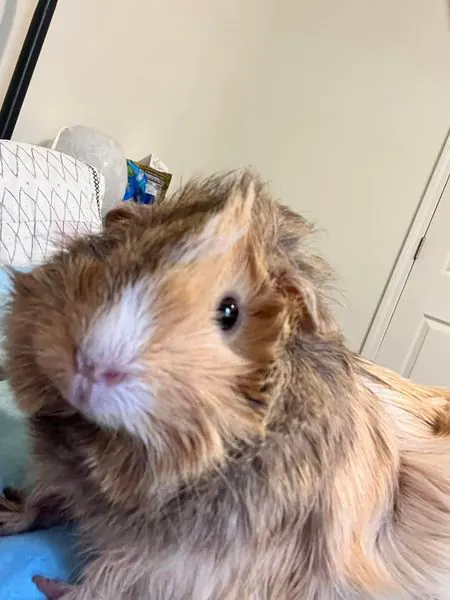
As prey animals, guinea pigs instinctively hide symptoms of disease until an illness is significantly advanced. A guinea pig that looks "slightly tired" may actually be facing a serious medical emergency.
1. Refusal to Eat Hay or Pellets (Emergency!)
If a guinea pig stops eating for more than 6–12 hours, their gut motility slows down, leading to Gastrointestinal (GI) Stasis. This is a life-threatening medical emergency requiring immediate veterinary care and syringe feeding.
2. Weight Loss Exceeding 50g (1.7 oz)
Weight drops are almost always the first sign of illness, often occurring days before visible symptoms appear.
3. Respiratory Distress (URI Signs)
- Crusty eyes or nose discharge.
- Wheezing, clicking noises while breathing, or labored sides moving.
- Upper Respiratory Infections (URIs) escalate rapidly in cavies.
4. Lethargy & Puffed Fur
- Hunching in a corner with puffed-up coat.
- Unresponsiveness to favorite treats or veggies.
5. Changes in Poop Size, Shape, or Frequency
- Small, teardrop-shaped, or dry poops (sign of reduced eating/dehydration).
- Soft, watery diarrhea (immediate emergency).
Additional Red Flags
- Screaming or Grunting While Urinating (Bladder stones/UTI).
- Excessive Drooling / Wet Chin (Dental malocclusion).
- Head Tilt or Loss of Balance (Inner ear infection).
- Hair Loss, Intense Scratching, or Scabs (Mites/Fungal infection).
- Bloated, Hard, or Painful Abdomen (Bloat/Gas).
Key Takeaway
Never wait and see with guinea pigs. Early intervention by an exotic vet saves lives.
Frequently Asked Questions
What is the most common early sign that a guinea pig is sick?
Subtle weight loss (30g to 50g+) and decreased hay intake are the earliest indicators. Because cavies instinctively hide obvious weakness from predators, routine weekly weigh-ins on a digital scale are vital.
How long can a guinea pig go without eating?
A guinea pig should never go more than 12 hours without food. Without continuous fiber moving through their gastrointestinal tract, gut motility halts (GI stasis) and dangerous liver complications can develop rapidly.
What should I do if my guinea pig is showing one of these signs?
Do not take a "wait and see" approach. Separate the pig temporarily to monitor exact poop and food output, weigh them immediately in grams, and call an exotic companion mammal veterinarian.
Sources & Scientific References
- Ferrets, Rabbits, and Rodents: Clinical Medicine and Surgery 4th Edition — Quesenberry, K. & Carpenter, J. (Elsevier Health Sciences, 2020)[View Source ↗]