
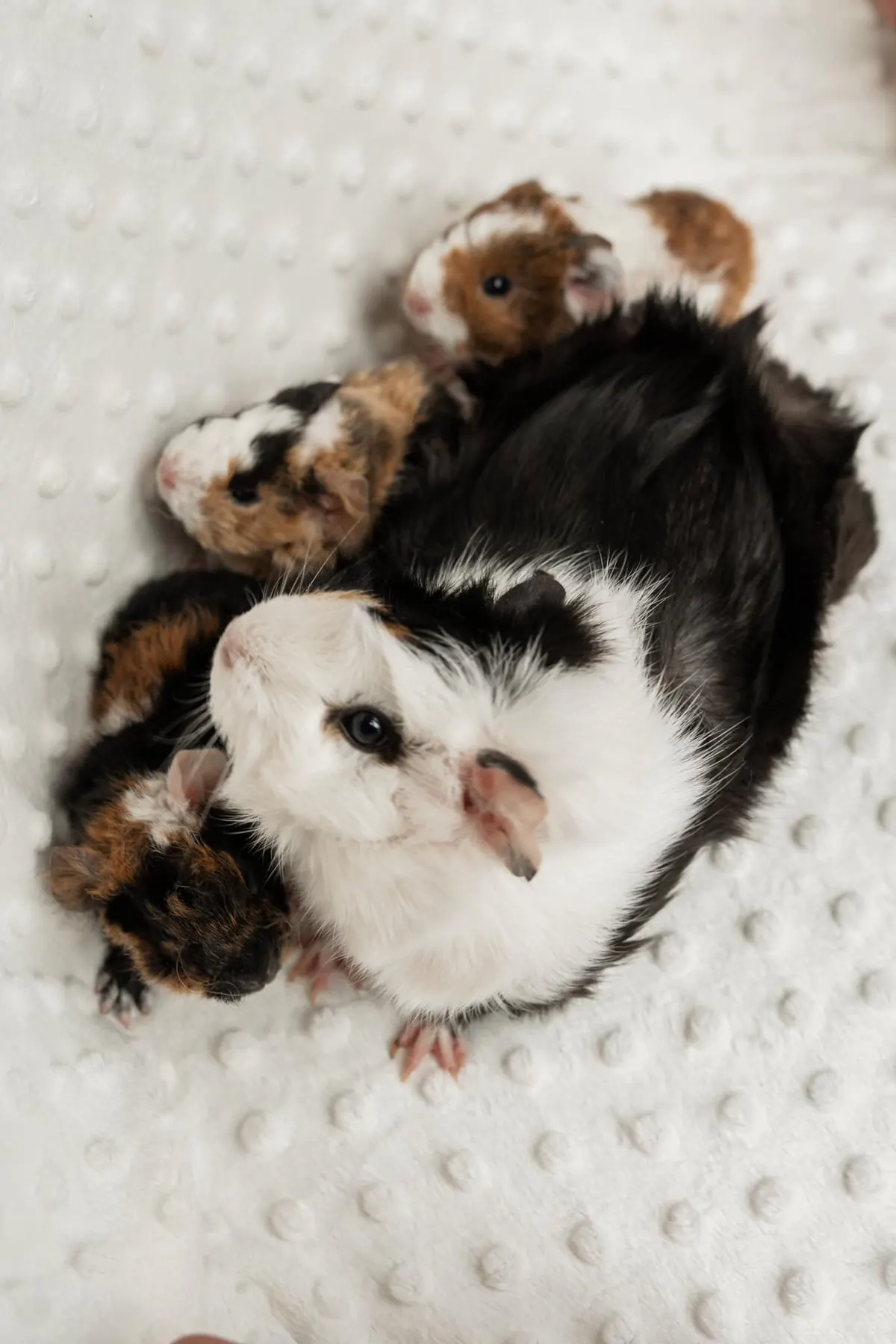
Guinea pigs need large, flat floor space to run, exercise, and establish comfortable herd hierarchy. Because cavies are ground-dwelling rodents that cannot climb like hamsters or rats, vertical multi-story cages do not meet their biological requirements.
Here are the official veterinary and RSPCA enclosure standards, exact C&C grid dimensions, and bedding comparisons.
1. Guinea Pig Cage Size Chart (RSPCA & HSUS Standards)
Use this sizing matrix to determine the minimum and preferred flat floor footprint for your herd:
| Number of Cavies | Minimum Square Footage | Preferred / Humane Footprint | Standard C&C Grid Size | Dimensions in Inches & cm | | :--- | :--- | :--- | :--- | :--- | | 1 Guinea Pig (Single/Medical) | 7.5 sq ft (0.7 m²) | 7.5 sq ft | 2 x 3 Grids | 28" x 42" (71 x 107 cm) | | 2 Guinea Pigs (Bonded Pair) | 7.5 sq ft (Absolute min) | 10.5+ sq ft (Recommended) | 2 x 4 Grids | 28" x 56" (71 x 142 cm) | | 3 Guinea Pigs (Trio) | 10.5 sq ft (1.0 m²) | 13.0+ sq ft | 2 x 5 Grids | 28" x 70" (71 x 178 cm) | | 4+ Guinea Pigs (Herd) | 13.0 sq ft (1.2 m²) | 16.0+ sq ft | 2 x 6 Grids (or L-Shape) | 28" x 84" (71 x 213 cm) |
Note: For male pairs (boars), always provide at least a 2x4 or 2x5 C&C cage. Boars require greater personal territory to prevent dominance squabbles and fighting.
2. Why Ramps and Lofts Do Not Count
A common pet store misconception is adding a second shelf or steep ramp to satisfy square footage.
- Flat Distance is Essential: Guinea pigs have fragile spines and compact foot pads. They require straight running paths for "popcorning" and cardiovascular exercise.
- Lofts are Bonus Enrichment: You may add a gentle ramp with safety sides as a feeding loft, but the ground floor must independently satisfy the minimum square footage rules.
3. Ventilation: C&C Grids vs. Glass Tanks
- Open-Air C&C Grid Enclosures: Approved & Recommended. Allows continuous air circulation so volatile ammonia gas from urine disperses immediately.
- Glass Aquariums & Solid Plastic Tubs: ❌ STRICTLY FORBIDDEN. Aquariums trap ammonia fumes at ground level, rapidly irritating delicate nasal passages and triggering fatal bacterial Upper Respiratory Infections (URIs).
4. Bedding Options Compared
| Bedding Type | Pros | Cons & Upkeep | |---|---|---| | Fleece Liners + Puppy Pads | Reusable, dust-free, gentle on foot pads (prevents bumblefoot), economical long term | Requires washing 2x weekly; daily spot poop sweeps | | Kiln-Dried Paper Bedding | High absorbency, easy disposal, natural odor control | High recurring cost; must be 99% dust-free | | Aspen Wood Shavings | Affordable, naturally safe hardwood | Can get messy; avoid sharp wood splinters | | Cedar / Untreated Pine | ❌ DANGEROUS | Toxic aromatic phenol oils cause liver and lung failure |
Frequently Asked Questions About Cage Sizing
What is the RSPCA recommended minimum cage size for two guinea pigs?
The RSPCA sets the absolute minimum at 7.5 square feet (0.7 m²), but strongly recommends 10.5 square feet (a 2x4 C&C cage) as the humane standard for a bonded pair.
Can guinea pigs live in pet store cages?
Over 90% of commercial wire cages sold in pet shops measure less than 4 to 5 square feet. These are dangerously undersized and lead to territorial aggression, joint stiffness, and poor hygiene.
How do I make a C&C cage at home?
Buy standard 14-inch wire storage grid cubes with safe 1.5-inch grid openings. Connect them into a 2x4 rectangle and line the base with scored 4mm Coroplast sheet with 6-inch raised walls.
Sources & Scientific References
- Housing Standards for Domestic Small Companion Mammals — Royal Society for the Prevention of Cruelty to Animals (RSPCA) (RSPCA Housing Series, 2024)[View Source ↗]
- Humane Society of the United States Guinea Pig Housing Standards — HSUS Companion Animal Department (Humane Society Guidelines, 2023)[View Source ↗]